Second-term "scandal season" appears to be fully engaged in Washington, D.C., with beltway reporters tripping over each other to get the latest development, tidbit or rumor on several different potentially unsavory stories involving the Obama administration. Over the weekend, we wrote about the renewed questioning about the attack last year on an American consulate in Benghazi, Libya. The political opportunity for Republicans in attacking both President Barack Obama and prospective 2016 Democratic presidential candidate Hillary Clinton in one fell swoop has guaranteed maximum effort will be put into hyping what looks like a perilously thin case (as opposed to, say, fictitious weapons of mass destruction in Iraq) of foreign policy "dishonesty."
A second story brewing concerns the supposed "targeting" of conservative groups with the words "Tea Party" or "Patriot" in their names by the Internal Revenue Service for "additional scrutiny." NBC News reports:
Amid outcry over revelations that Internal Revenue Service specialists specifically targeted conservative groups for scrutiny before the 2012 elections, President Barack Obama said Monday that the tax agency employees' reported conduct was "outrageous" and "contrary to our traditions."
"…If in fact IRS personnel engaged in the kind of practices that have been reported on and were intentionally targeting conservative groups, then that’s outrageous and there’s no place for it," he said.
Of the "scandal" stories that have sprung up in the last week, this business about the Internal Revenue Service targeting conservative groups is arguably the most problematic. The controversy over who "authored the talking points" over the attack on the Benghazi consulate has limited value beyond a small number of obsessives. The power of the IRS brought to bear against political opponents, however, would be a serious problem, even if it was only low-level employees. No responsible person, including defenders of the administration, should disagree.
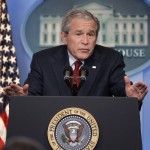
That said, the fact that former President George W. Bush's IRS did the same thing…still matters, right?
“I wish there was more GOP interest when I raised the same issue during the Bush administration, where they audited a progressive church in my district in what look liked a very selective way,” California Democratic Rep. Adam Schiff said on MSNBC Monday. “I found only one Republican, [North Carolina Rep. Walter Jones], that would join me in calling for an investigation during the Bush administration. I’m glad now that the GOP has found interest in this issue and it ought to be a bipartisan concern.”
The well-known church, All Saints Episcopal in Pasadena, became a bit of a cause célèbre on the left after the IRS threatened to revoke the church’s tax-exempt status over an anti-Iraq War sermon the Sunday before the 2004 election. “Jesus [would say], ‘Mr. President, your doctrine of preemptive war is a failed doctrine,’” rector George Regas said from the dais…
And it wasn’t just churches. In 2004, the IRS went after the NAACP, auditing the nation’s oldest civil rights group after its chairman criticized President Bush for being the first sitting president since Herbert Hoover not to address the organization. “They are saying if you criticize the president we are going to take your tax exemption away from you,” then-chairman Julian Bond said. “It’s pretty obvious that the complainant was someone who doesn’t believe George Bush should be criticized, and it’s obvious of their response that the IRS believes this, too.”
Yesterday's Salon story also describes a 2006 complaint against Greenpeace by an obscure conservative organization, which led to an audit and threats to revoke the tax status of that organization. Ultimately, much like the "additional screening" alleged to have been prescribed for "Tea Party" and "Patriot" groups more recently, the increased level of scrutiny of these liberal groups under Bush's IRS led to nothing. Then as now, none of the groups "targeted" were actually stripped of their status–the grievance was and is more about the time and expense involved in satisfying requests for records.
There's one other local detail to add to this story that we think readers might find interesting. Some might recall a state campaign finance law complaint filed by longtime Pakistani-American GOP donor Malik Hasan against the Southern Colorado Tea Party, related to that group's explicit support for 2010 Colorado treasurer candidate J.J. Ament against opponent Ali Hasan. In May of 2012, the Southern Colorado Tea Party was ordered to pay some $20,000 in fines and late fees related to not having filed as a donor committee with the Colorado Secretary of State. In response to the allegation, the SCTP claimed that "ours was an organization just like a bowling league, a community organization."
Folks, we can't speculate what other "Tea Party" groups might have put on their tax-exempt applications, but that kind of laissez-faire mentality about campaign finance appears awfully common with these groups. How many of them would plead the same as what the Southern Colorado Tea Party told the judge–"just like a bowling league?" It seems to us that would result in a little "scrutiny"–and it should.
Subscribe to our monthly newsletter to stay in the loop with regular updates!
Comments