The AP’s Dan Elliot updates the state of play on the always-controversial issue of hydraulic fracturing, or “fracking,” near Colorado’s populated areas. After a compromise last year that ended the threat of a ballot measure increasing setbacks for drilling from existing development, a task force convened that issued limited recommendations for improving local control over drilling in February. The drilling industry was very happy with the limited scope of the task force’s recommendations, but conservation activists and local communities–including northern Front Range cities that already had passed bans and moratoria on fracking–felt betrayed.
In 2016, it looks like they may well get another shot:
“I think the fossil fuels industry won,” said Karen Dike, a member of Coloradans Against Fracking.
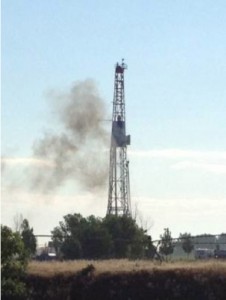
Fracking is a pressing issue in Colorado, the nation’s No. 7 energy-producing state. Along the urban Front Range, expanding suburbs and booming oilfields are running into each other, and drilling rigs sometimes show up near public schools. Several municipal attempts to ban fracking have failed, and the industry warns that local control would stifle energy development.
Dike and others won’t say whether they plan to put measures that would restrict fracking on the 2016 ballot, but they don’t rule it out…
[Rep Jared] Polis said fracking could be on the 2016 ballot if state officials don’t further regulate the industry. He stopped short of saying whether he would organize the effort, but he wants lawmakers and regulators to adopt three proposals that weren’t formally recommended by the task force.

Rep. Jared Polis became involved in the state-level debate over fracking after a drilling company illegally sited a well too close to structures on Weld County land owned by the wealthy congressman. After his own experience, which resulted in a hefty fine against the offending driller, Polis came out in support of two specific ballot measures: a general “bill of rights” empowering local communities to regulate land uses within their boundaries, and a measure increasing setbacks for drilling from existing development to 2,000 feet. The failure of the task force he helped broker via the threat of a well-funded ballot measure reportedly did anger Polis, but so did the unreasonable reaction of anti-fracking activists who bitterly denounced his good-faith attempts to forge a compromise.
Today, it’s true that some of the pressure on this debate has dissipated as energy prices have plummeted during OPEC’s anti-fracking price war. The drilling industry, just last year very bullish about its future growth, has seen new drilling projects slow dramatically, and hiring postings turn into layoffs. The reduced pressure from less demand for new drilling creates a situation where the industry claims victimhood indiscriminately, blaming “fractivists” for industry downturns that have nothing to do with their efforts.
Both the industry and the far left wing of environmentalists would prefer the debate be about a wholesale ban on fracking statewide. The industry uses the simplistic arguments surrounding a ban to divide the opposition, while the far left…well, they’re just not realistic about what can be achieved in a major energy producing state like Colorado. Certainly there is a problem with all-or-nothing argumentation on both sides of this debate, but we continue to believe that what the energy industry fears most are reasonable, targeted proposals to mandate better protection of residential communities.
The reason is simple: they could actually pass.
One would let local governments impose stricter rules than the Colorado Oil and Gas Conservation Commission, charged with regulating drilling statewide. Another would change the commission’s role from facilitating oil and gas development to simply regulating it. The third would set up a panel to resolve disputes between energy companies and local governments or property owners before they land in court.
None of these proposals fit the industry’s alarmist predictions of what would happen if Colorado “banned fracking.” If the industry and surrogates are able to continue to define the debate in those black-and-white terms, they’ll win. If pragmatic-minded conservationists can keep focused on proposals that would genuinely help protect communities while avoiding the industry’s semantic games, they could accomplish something that would have much more of an impact on our state’s health and environment in the long run.
We’ll just have to wait and see who’s smarter about it.
Subscribe to our monthly newsletter to stay in the loop with regular updates!
Comments