U.S. Senate See Full Big Line

(D) J. Hickenlooper*

(D) Julie Gonzales

(R) Janak Joshi

80%

40%

20%

(D) Michael Bennet

(D) Phil Weiser
55%

50%↑
Att. General See Full Big Line

(D) Jena Griswold

(D) M. Dougherty

(D) Hetal Doshi

50%

40%↓

30%

Sec. of State See Full Big Line
(D) J. Danielson

(D) A. Gonzalez
50%↑

20%↓
State Treasurer See Full Big Line

(D) Jeff Bridges

(D) Brianna Titone

(R) Kevin Grantham

50%↑

40%↓

30%

CO-01 (Denver) See Full Big Line

(D) Diana DeGette*

(D) Wanda James

(D) Milat Kiros

80%

20%

10%↓

CO-02 (Boulder-ish) See Full Big Line

(D) Joe Neguse*

(R) Somebody

90%

2%

CO-03 (West & Southern CO) See Full Big Line

(R) Jeff Hurd*

(D) Alex Kelloff

(R) H. Scheppelman

60%↓

40%↓

30%↑

CO-04 (Northeast-ish Colorado) See Full Big Line

(R) Lauren Boebert*

(D) E. Laubacher

(D) Trisha Calvarese

90%

30%↑

20%

CO-05 (Colorado Springs) See Full Big Line

(R) Jeff Crank*

(D) Jessica Killin

55%↓

45%↑

CO-06 (Aurora) See Full Big Line

(D) Jason Crow*

(R) Somebody

90%

2%

CO-07 (Jefferson County) See Full Big Line

(D) B. Pettersen*

(R) Somebody

90%

2%

CO-08 (Northern Colo.) See Full Big Line

(R) Gabe Evans*

(D) Shannon Bird

(D) Manny Rutinel

45%↓

30%

30%

State Senate Majority See Full Big Line

DEMOCRATS

REPUBLICANS

80%

20%

State House Majority See Full Big Line

DEMOCRATS

REPUBLICANS

95%

5%

Generic selectors
Exact matches only
Search in title
Search in content
Post Type Selectors
August 04, 2015 01:47 PM UTC

Sorry, Walker Stapleton: Price of Gold Plunges

  •  
  • by: Colorado Pols

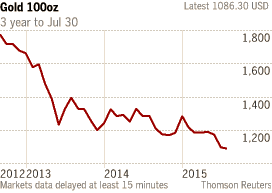
ChartBuilderIn 2010, as the nation was in the grip of a major economic downturn, right-wing candidates capitalized on uncertainty about the economy by seeking to outdo each other with frightening predictions about the future–and what they would do to save us. In the case of then-candidate for Colorado Treasurer Walker Stapleton, he responded to a question in a primary debate about the economy by suggesting the state invest in gold to hedge against what he foresaw as a “hyperinflationary environment.”

STAPLETON: The Treasury’s portfolio has not changed markedly in the last eight or ten years under Treasurer Mike Coffman, under Treasurer Mark Hillman and now under Treasurer Cary Kennedy. And that’s been okay, it’s weathered the storm fairly well. The problem is that we, I believe we are entering a hyper-inflationary environment. We’re going to need to shorten the duration of a lot of the state’s investments, the duration of the portfolio to adjust to a hyper-inflationary environment…

And I think hedging, using using gold to hedge against inflation or another precious metal is something the state needs to investigate. It’s something we haven’t done in the past, and it could be an effective method of dealing with a hyper-inflationary environment.

Fast-forward to today’s news:

“We see further downward pressure on gold prices, possibly stabilising at an eventual rate of US$1,000 a troy ounce,” said Mr Howie Lee, a Phillip Futures investment analyst. “It seems to be an end of an era for the precious metal. Even in a crisis, it has not picked up much appeal.”

Amid the recent turmoil in Chinese markets that spread to bourses across the globe, gold prices have remained weak. According to a Bloomberg survey on Jul 29, traders expect gold prices will drop to US$984 an ounce before January next year. That would be the lowest since 2009.

One factor weighing on the outlook for the yellow metal is a US Federal Reserve rate hike expected later this year that will push the greenback even higher and raise the opportunity cost of holding gold, which carries zero interest.

The traditional sales tactic for gold and other precious metals involves spreading fear about the economy to motivate investors to “hedge” their investments against uncertainty. Since Barack Obama became President in 2009 in the midst of a recession he did not create, a natural alliance has formed between Obama’s political enemies and gold trading companies. Republicans set themselves up for victory in 2010 by making voters believe that the world was about to end, which boosted gold trading companies as rattled Americans bought up gold to survive the coming Obamanation.

But between Stapleton’s dire predictions of “hyperinflation” and today, something else happened: the American economy didn’t collapse after all. In 2010, the U.S. economy was already emerging from the depths of recession, a process that has continued to this day. The economic fears that prevailed in 2010 have slowly dissipated, and as a result the price of gold has plunged by hundreds of dollars in the last few years (see chart above right). There are predictions now that the price of gold could fall even more, below $1,000 per ounce and perhaps much farther.

Safe to say, thank goodness Colorado didn’t fill the state treasury with gold!

Now that the price of gold is dropping like a rock, we’d say the question of what Walker Stapleton was thinking in 2010 is even more relevant. Why did this supposed financial expert make such wildly inaccurate predictions about the economy, and then propose a remedy that now appears absolutely foolhardy? We know there are plenty of theories–we want to hear it from Stapleton personally.

Because as much as everyone rushes to excuse yesterday’s “Tea Party” nuttiness, it happened. He said it.

Comments

Recent Comments


Posts about

Donald Trump
SEE MORE

Posts about

Rep. Lauren Boebert
SEE MORE

Posts about

Rep. Gabe Evans
SEE MORE

Posts about

Colorado House
SEE MORE

Posts about

Colorado Senate
SEE MORE

54 readers online now

Newsletter

Subscribe to our monthly newsletter to stay in the loop with regular updates!