U.S. Senate See Full Big Line

(D) J. Hickenlooper*

(D) Julie Gonzales

(R) Janak Joshi

80%

40%

20%

(D) Michael Bennet

(D) Phil Weiser
55%

50%↑
Att. General See Full Big Line

(D) Jena Griswold

(D) M. Dougherty

(D) Hetal Doshi

50%

40%↓

30%

Sec. of State See Full Big Line
(D) J. Danielson

(D) A. Gonzalez
50%↑

20%↓
State Treasurer See Full Big Line

(D) Jeff Bridges

(D) Brianna Titone

(R) Kevin Grantham

50%↑

40%↓

30%

CO-01 (Denver) See Full Big Line

(D) Diana DeGette*

(D) Wanda James

(D) Milat Kiros

80%

20%

10%↓

CO-02 (Boulder-ish) See Full Big Line

(D) Joe Neguse*

(R) Somebody

90%

2%

CO-03 (West & Southern CO) See Full Big Line

(R) Jeff Hurd*

(D) Alex Kelloff

(R) H. Scheppelman

60%↓

40%↓

30%↑

CO-04 (Northeast-ish Colorado) See Full Big Line

(R) Lauren Boebert*

(D) E. Laubacher

(D) Trisha Calvarese

90%

30%↑

20%

CO-05 (Colorado Springs) See Full Big Line

(R) Jeff Crank*

(D) Jessica Killin

55%↓

45%↑

CO-06 (Aurora) See Full Big Line

(D) Jason Crow*

(R) Somebody

90%

2%

CO-07 (Jefferson County) See Full Big Line

(D) B. Pettersen*

(R) Somebody

90%

2%

CO-08 (Northern Colo.) See Full Big Line

(R) Gabe Evans*

(D) Shannon Bird

(D) Manny Rutinel

45%↓

30%

30%

State Senate Majority See Full Big Line

DEMOCRATS

REPUBLICANS

80%

20%

State House Majority See Full Big Line

DEMOCRATS

REPUBLICANS

95%

5%

Generic selectors
Exact matches only
Search in title
Search in content
Post Type Selectors
October 07, 2015 12:31 PM UTC

Turning Points for Renewable Energy

  •  
  • by: Colorado Pols
Turning points.
Turning points.

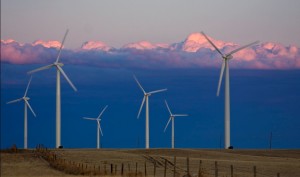
Whether it comes out of the ground or from the sky, energy production remains a hot topic in Colorado. Each side has its own set of arguments, but we may be reaching a true tipping point in favor of renewable energy.

As Tom Randall writes for Bloomberg Business, the “capacity factor” is making solar and wind energy more economically-viable than other sources of energy:

Wind power is now the cheapest electricity to produce in both Germany and the U.K., even without government subsidies, according to a new analysis by Bloomberg New Energy Finance (BNEF). It’s the first time that threshold has been crossed by a G7 economy.

But that’s less interesting than what just happened in the U.S.

To appreciate what’s going on there, you need to understand the capacity factor. That’s the percentage of a power plant’s maximum potential that’s actually achieved over time…

…One of the major strengths of fossil fuel power plants is that they can command very high and predictable capacity factors. The average U.S. natural gas plant, for example, might produce about 70 percent of its potential (falling short of 100 percent because of seasonal demand and maintenance). But that’s what’s changing, and it’s a big deal.

For the first time, widespread adoption of renewables is effectively lowering the capacity factor for fossil fuels. [Pols emphasis] That’s because once a solar or wind project is built, the marginal cost of the electricity it produces is pretty much zero—free electricity—while coal and gas plants require more fuel for every new watt produced. If you’re a power company with a choice, you choose the free stuff every time.

In any political debate, simple economic factors can end up making the strongest argument. All of the saber-rattling and fist-shaking about fossil fuels and renewables will grind to a halt when oil and gas production is no longer economically preferable…and it appears we may be crossing that bridge.

Comments

Recent Comments


Posts about

Donald Trump
SEE MORE

Posts about

Rep. Lauren Boebert
SEE MORE

Posts about

Rep. Gabe Evans
SEE MORE

Posts about

Colorado House
SEE MORE

Posts about

Colorado Senate
SEE MORE

35 readers online now

Newsletter

Subscribe to our monthly newsletter to stay in the loop with regular updates!